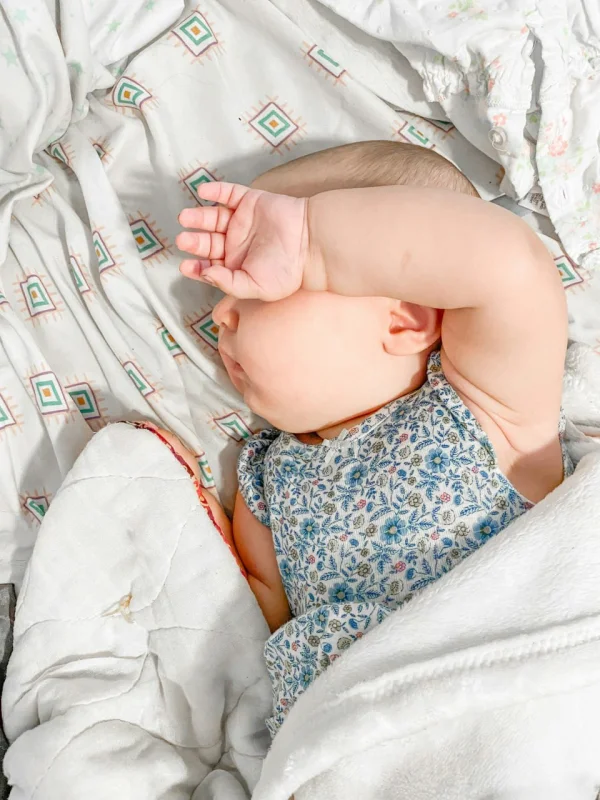
Red Nose Australia recommends six evidence-based safe sleep practices that reduce the risk of SIDS and fatal sleep accidents. and the most important one is always placing your baby on their back to sleep, in their own safe cot, with a firm mattress and no loose bedding. According to Red Nose, SIDS rates in Australia have dropped by over 80% since safe sleep campaigns began in the 1990s. Following these six recommendations is the most effective thing you can do to protect your baby.
Not sure when to make the switch? Read our guide on when to stop swaddling: rolling while swaddled is a SIDS risk every parent should know about.
This guide covers each of the six safe sleep recommendations in detail, how to set up a safe cot step by step, the difference between room sharing and bed sharing, seasonal safety, and the role of dummies and breastfeeding in SIDS prevention. All information is based on Red Nose Australia's safe sleep guidelines
These align with the American Academy of Pediatrics (AAP) safe sleep guidelines, which Red Nose adapts for Australian families.; Australia's leading authority on SIDS prevention.
Red Nose Australia's six safe sleep recommendations are based on decades of research and are endorsed by every major Australian health organisation. Here they are in full:
Red Nose Australia helpline: Call 1300 998 698 for free safe sleep information and support. Available to all Australian families. You can also visit rednose.org.au for detailed safe sleep resources.
A safe cot is the foundation of safe sleep. Here's exactly what it should look like, according to Red Nose Australia:
Of all the safe sleep recommendations, sleep position is the most important. Red Nose Australia's message is unequivocal: always place your baby on their back to sleep, from birth, for every sleep: day naps and night sleep. Back sleeping is the single most effective thing you can do to reduce the risk of SIDS and fatal sleep accidents.
Side sleeping is not safe. A baby placed on their side can easily roll onto their tummy, and the younger the baby, the less able they are to roll back. Some parents worry about flat spots on the back of the head (positional plagiocephaly), but this is managed with supervised tummy time during awake hours, not by compromising sleep position. Tummy time strengthens your baby's neck and shoulder muscles and gives the back of the head a break. It should only happen when your baby is awake and you are watching.
You may have seen sleep positioners: foam wedges or rolled cushions marketed as keeping your baby in a specific sleep position. Red Nose Australia and the ACCC both warn against these products. Sleep positioners are not safe. They pose a suffocation risk and have been linked to infant deaths overseas. Do not use them, regardless of what the packaging claims.
Tummy sleeping carries the highest SIDS risk. The only time tummy sleeping is acceptable is when your baby can roll independently: usually between four and six months, and even then, you must always place them on their back to start the sleep. If they roll onto their tummy on their own during the night, you do not need to reposition them. But the starting position must always be back.
Once your baby starts rolling, you may notice they flip onto their tummy almost immediately after you place them on their back. This is fine. The key is that they got there themselves, which means they have the neck strength and head control to lift and turn their head if needed. Continue placing them on their back at every sleep, and let them find their own position from there. If you are unsure whether your baby is rolling consistently enough for this to be safe, check our baby sleep schedule by age guide for developmental milestones by month.
A safe cot has exactly three things in it: a firm mattress that meets Australian Standard AS/NZS 8811.1:2013, a fitted sheet, and your baby in a sleeping bag. Nothing else. The simplicity of that list surprises many new parents, but every extra item is a potential hazard.
For babies under twelve months, the only bedding that belongs in the cot is a fitted sheet. No flat sheets that can ride up. No doonas, quilts, or blankets that can cover your baby's face. No cot bumpers, even the mesh ones: they are a strangulation and entrapment risk and Red Nose Australia advises against all bumper types. Sleeping bags are the safe alternative to blankets. They keep your baby warm without the risk of fabric covering their face, and they cannot be kicked off during the night.
TOG ratings help you choose the right sleeping bag for the room temperature. A 1.0 TOG bag works for most Australian rooms at 20 to 22 degrees. In winter, a 2.5 TOG bag over warm pyjamas keeps your baby comfortable without blankets. In summer, a 0.2 or 0.5 TOG bag, or just a nappy on the hottest nights, is enough. See our room temperature and TOG guide for a complete dressing chart by season.
When can you introduce bedding? Here is a simple age-based guide:
| Age | Safe Bedding |
|---|---|
| Newborn to 6 months | Fitted sheet plus sleeping bag only. No blankets, no pillows, no toys. |
| 6 to 12 months | Fitted sheet plus sleeping bag. Still no blankets or pillows. |
| 12 to 24 months | Can introduce a light, cellular blanket tucked in firmly at the foot and sides of the cot. Sleeping bags are still the safer choice and most toddlers accept them well past age two. |
| 2 years and older | A small, firm pillow may be introduced when your child transitions to a toddler bed. Red Nose Australia recommends waiting until age two before introducing any pillow. |
A soft toy or comfort object is generally safe after seven months during awake settling, but Red Nose recommends removing it once your baby is asleep until they are at least twelve months old. For the complete picture on safe sleep products, see our baby sleeping bags guide.
Room sharing means your baby sleeps in the same room as a parent or caregiver, but in their own cot or bassinet. Bed sharing means sleeping in the same bed as your baby.
Room sharing: recommended. Red Nose Australia recommends room sharing for at least the first 6 months, ideally 12 months. A cot or bassinet next to your bed is protective against SIDS and also makes night feeds and settling easier. You can hear your baby, respond quickly, and check on them easily without getting up.
Bed sharing: not recommended. Red Nose advises against bed sharing, especially if your baby is under 4 months, was born premature or at low birth weight, or if you or your partner smoke, have consumed alcohol, are extremely tired, or are taking medication that makes you sleep heavily. Sofa sleeping with a baby is particularly dangerous: the risk of suffocation is significantly higher than in an adult bed.
If you do bring your baby into your bed for feeding or comfort, Red Nose recommends making the bed as safe as possible: remove pillows and doonas near the baby, keep the baby on their back, and place them back in their own cot as soon as you're ready to sleep.
Co-sleeping and room sharing are not the same thing. Room sharing (baby in their own cot next to your bed, covered in the previous section) is safe and recommended by Red Nose Australia for the first 6 to 12 months. Co-sleeping, also called bed sharing, means sleeping on the same surface as your baby. Red Nose Australia advises against co-sleeping because it increases the risk of SIDS and fatal sleep accidents.
The risks are highest when your baby is under 3 months, was born premature or at low birth weight, or if you or your partner smoke, have consumed alcohol, are taking sedating medication, or are extremely tired. Sofa or armchair sleeping with a baby is especially dangerous. Red Nose warns that suffocation risk on a sofa is significantly higher than in an adult bed, and it should never happen.
Some parents, particularly breastfeeding mothers, do co-sleep. Red Nose Australia acknowledges this reality and provides harm-reduction guidance for breastfeeding families. If you are breastfeeding and find yourself bringing your baby into bed, take these steps to reduce the risk:
Never co-sleep on a sofa, armchair, beanbag, or waterbed. These surfaces are not safe for any baby. If you might fall asleep while feeding on a sofa, set up a safer alternative in advance, like a firm mattress on the floor without pillows or blankets.
The Raising Children Network echoes Red Nose Australia's position: the safest place for your baby is in their own cot, in your room, on a firm, flat mattress. If co-sleeping happens during night feeds, place your baby back in their own cot as soon as you're ready to sleep. This reduces time in a higher-risk environment while still letting you respond quickly.
For more on when your baby is developmentally ready to settle independently, see our guide on age-appropriate sleep schedules. If your baby seems cold and you're considering co-sleeping, check our safe room temperature for sleep guide before bringing your baby into your bed.
When it's cold, the temptation is to add extra bedding, but layering your baby, not the cot: is the safest approach. Use a higher TOG sleeping bag (2.5 or 3.5 TOG) with layers underneath. Never use hot water bottles, electric blankets, or wheat bags in the cot. If using a room heater, set it to 18–20°C and keep it at least one metre from the cot.
Overheating is a SIDS risk factor. In hot weather, dress your baby lightly: a nappy and a 0.2 TOG sleeping bag (or no bag above 26°C). Use a fan to circulate air (not blowing directly on the baby). Keep blinds closed during the day to prevent the room from heating up. Watch for signs of overheating: flushed cheeks, rapid breathing, damp hair, or a sweaty neck.
For more detail, see our room temperature and baby sleep guide.
Red Nose Australia notes that dummy use during sleep is associated with a reduced risk of SIDS. While researchers don't fully understand why: it may be that the dummy helps keep the airway open or prevents the baby from falling into a very deep sleep: the association is consistent across multiple studies.
Red Nose guidelines for dummy use: Combined with safe swaddling, dummies provide two evidence-backed layers of SIDS protection.
A common point of confusion: tummy time is for awake, supervised play, never for sleep. Tummy time helps your baby develop neck, shoulder, and arm strength and prevents flat spots on the back of the head (positional plagiocephaly). But tummy time should only happen when your baby is fully awake and you're watching them.
Start with short periods (1–2 minutes, 2–3 times a day) from birth and gradually increase. As soon as your baby shows signs of tiredness (yawning, grizzling, turning away), move them to their back for sleep.
Red Nose Australia recommends keeping soft items out of the cot until at least 12 months. After 12 months, the risk of SIDS drops significantly, but safe sleep habits remain important. Many parents continue using sleeping bags rather than introducing blankets after 12 months, since sleeping bags are safer and stay in place through the night.
If you do introduce a blanket after 12 months, use a lightweight cellular blanket, tuck it in firmly at the foot and sides of the cot, and place your baby with their feet at the foot of the cot so they can't wriggle under the blanket. A small comfort toy (soft toy or small blanket square) is generally safe after 7 months during awake settling, but Red Nose recommends removing it once your baby is asleep until 12 months.
Choosing the right swaddle and knowing when to transition is key to SIDS prevention. See our top-rated picks for Australian babies.
See Best Baby Swaddles →Red Nose Australia's six safe sleep recommendations are: (1) Sleep baby on their back, not tummy or side. (2) Keep baby's head and face uncovered. (3) Keep baby smoke-free before and after birth. (4) Provide a safe sleep environment: firm mattress, no soft bedding, in a safe cot. (5) Sleep baby in their own safe cot in the same room as an adult caregiver for the first 6–12 months. (6) Breastfeed baby, if possible.
Yes. Red Nose Australia recommends room sharing (baby sleeps in the same room as a parent or caregiver, in their own cot) for at least the first 6 months, ideally 12 months. Room sharing is protective against SIDS and also makes night feeding and settling easier.
The risk of SIDS drops significantly after 6 months and is very rare after 12 months. However, Red Nose Australia recommends continuing safe sleep practices through the first year of life. While SIDS is most common between 2–4 months, the safe sleep habits you build in the early months benefit your baby well beyond the first year.
No. Red Nose Australia recommends babies sleep on their back, not on their side or tummy. Side-sleeping is unstable: babies can easily roll onto their tummy, which increases SIDS risk. Once your baby can roll independently (usually around 4–6 months), you don't need to reposition them if they roll during sleep, but always place them on their back to start.
Red Nose Australia notes that dummy use is associated with a reduced risk of SIDS, though the mechanism is not fully understood. If your baby uses a dummy for sleep, offer it at every sleep time. If the dummy falls out during sleep, there's no need to replace it. Do not attach a dummy to your baby's clothing or around their neck: this is a strangulation risk.
← Swaddle TOG & Temperature Guide