Swaddling helps your newborn feel safe and sleep longer by calming their startle reflex. But doing it wrong is dangerous, so follow Red Nose Australia's evidence-based guidelines below. Already swaddling? Check our TOG and temperature guide for Aussie weather, or read swaddle vs sleep sack to plan your next step. Once bub is settled in the swaddle, see our sleep training methods guide to build a full sleep routine. When you're ready to transition, our when to stop swaddling guide walks you through it.
A swaddle wraps your baby's arms gently to stop the startle reflex (Moro reflex) from waking them. Newborns jerk their arms 10-15 times a night: swaddling prevents this, helping them settle faster and sleep longer.
Research shows swaddling reduces spontaneous waking by up to 30% in newborns, that's 2-3 fewer wake-ups per night for the average baby.
Australian hospitals teach it as standard newborn care, and it's most effective in the first 3-4 months while the startle reflex is strongest. Swaddling works best as part of a full newborn routine: our 0-3 month sleep schedule covers wake windows week by week and sample days.

Did you know? Red Nose Australia recommends swaddling from birth, but only when done safely. Always place baby on their back. Stop swaddling when they show any signs of rolling.
Spread a square wrap on a flat surface in a diamond shape. Fold the top corner down about 15cm to create a straight edge across your baby's shoulders. The diamond orientation gives you the longest wings to wrap with.
Place baby on their back, shoulders level with the folded edge. Neck above the fold, never cover their face. Arms resting naturally at their sides or slightly bent.
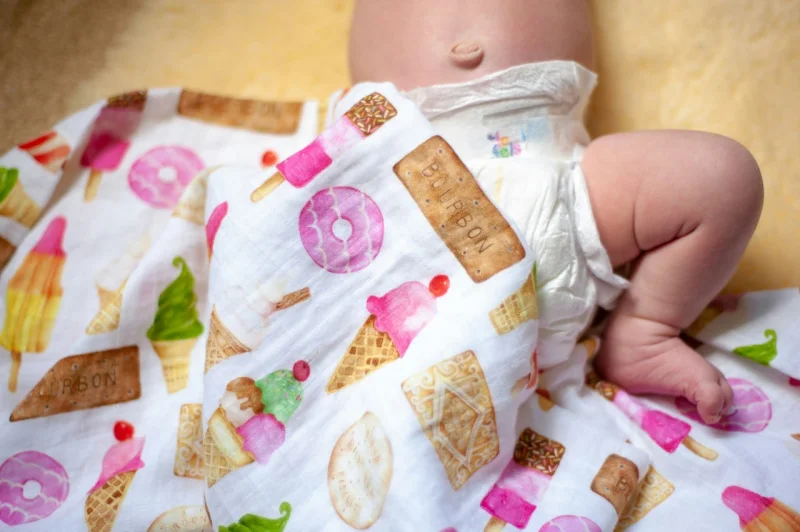
Take the left corner and pull it across baby's chest. Tuck firmly under their right side. Snug around the arm, loose around the hips: legs need room to bend freely.
Fold the bottom corner up over baby's feet, not too tight. Wrap the right corner across their chest, tucking under the left side. The final wrap should allow two fingers between fabric and chest.
Red Nose Australia leads SIDS prevention in Australia. Their safe swaddling checklist:
Best for babies with a strong startle reflex. Arms wrapped straight down. Use a muslin wrap or SwaddleMe Original (AU$20-23) for the quickest arms-down swaddle.
Some babies sleep better with hands near their face: the womb position. The Love to Dream Swaddle Up (AU$45-50) has patented wings that let babies self-soothe by touching their face.
The traditional method with a square muslin. Great for Australian summers: the loose cotton weave is highly breathable. Aden + Anais Essentials 4-pack (AU$50-54): four 112×112cm wraps.
For parents who don't want to wrap at 3am. Zip-up swaddles like the ergoPouch Cocoon (AU$43-75) or Tommee Tippee Grobag (AU$42-50) take seconds and have two-way zippers for easy nappy changes.
Not sure which swaddle type is right for your baby? Every baby is different. Try one style for a few nights: if it doesn't work, switch. The right swaddle is the one your baby actually sleeps in.
See my honest comparison of 6 best swaddles: tested with real Australian prices.
Read the Full Review →Always place baby on their back. Keep the swaddle firm around arms but loose around hips so legs can bend naturally. Stop swaddling when rolling starts. Never swaddle above the shoulders: fabric must sit below the neck.
From birth. Most Australian hospitals show you how before discharge. Swaddling works best in the first 3-4 months while the startle reflex is strongest.
Depends on your baby. Some prefer arms-up (natural womb position), others settle better with arms wrapped down. Try both: Love to Dream Swaddle Up for arms-up, SwaddleMe Original for arms-down.
Firm around arms to control the startle reflex, loose around hips and legs. Red Nose Australia says legs should bend up and out freely. Too tight around the hips increases hip dysplasia risk.
Yes, use a lightweight 0.2 TOG swaddle or single-layer muslin. Avoid fleece or heavy blankets. In 30°C+ heat, a short-sleeve bodysuit under a light swaddle is usually enough.
← Back to Best Baby Swaddle Reviews