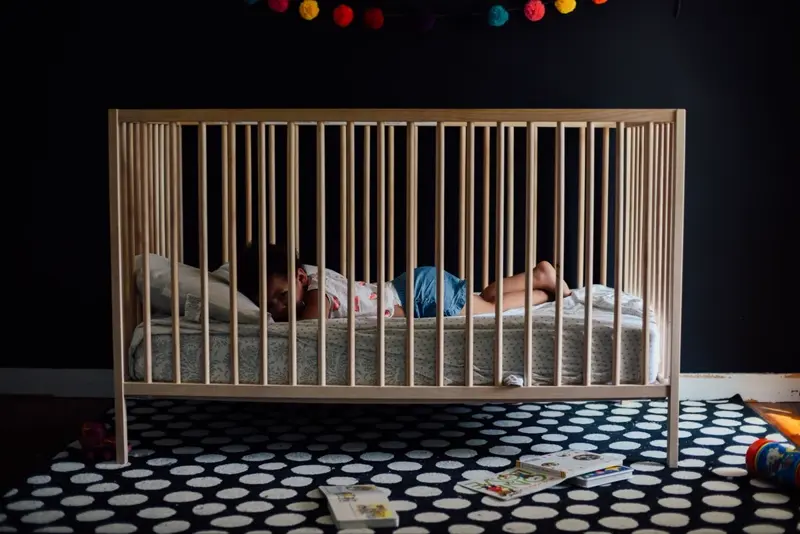
Your baby was finally sleeping in longer stretches. Then the drooling started and the nights fell apart.
Teething and sleep disruption go hand in hand. I have talked to enough Aussie parents to know that every single one has a story about the week their baby cut a tooth and nobody slept. The trick is knowing what actually helps, what is a waste of money, and when the crying is not teething at all. And if your baby is between 3-6 months and sleep is suddenly worse, check our baby sleep schedule by age guide: the timing might be developmental, not dental.
Most babies get their first tooth around six months, but the range is wide. Some are born with teeth. Others hit their first birthday with nothing but gums. All of it is normal.
The bottom front teeth (central incisors) usually show up first, between 5 and 7 months. The top front teeth follow a month or two later. By their first birthday, most babies have the front four on top and bottom.
The pain comes before you see the tooth. Gums can be swollen and tender for weeks before anything breaks through. This is when sleep is at its worst: the tooth is moving under the surface and your baby cannot tell you what hurts.
The first molars arrive around 12 to 18 months, and they are the real sleep-wreckers. They are bigger, duller, and take longer to cut. If your baby's sleep suddenly falls apart around 14 months, check the back gums.
Red cheeks, drooling, chewing on everything: you probably know those already. Less obvious signs include:
Key rule: A fever over 38C is not teething. If your baby has a proper temperature alongside sleep disruption, you are dealing with something else: most likely an ear infection or a virus. See the red flags section below.
Teething pain does not clock off at 7pm. It can actually feel worse at night.
During the day, your baby has distractions: you, toys, food, the dog. At night, lying still in a dark room, there is nothing to take their mind off the throbbing in their gums. The pressure from lying flat can make it worse too, especially with the molars.
On top of the pain, teething brings more drool. More drool means a wetter chest and collar, which means a cold, uncomfortable baby at 2am.
It helps to know which teeth line up with which regressions. The 4-month sleep regression hits before any teeth show up, that one is neurological, not dental. But the 8-10 month regression often overlaps with the top front teeth coming through. If your baby was sleeping well and suddenly is not, check which teeth are due.
The molars at 12-18 months are the hardest. They coincide with the 12-month sleep regression and the start of separation anxiety. It is a perfect storm for disrupted nights.
Tresillian's advice is to treat the pain first, then work on settling. You cannot sleep-train through teething pain, and you should not try.
We are in July, which means heaters running overnight and dry indoor air. Dry air dries out your baby's mouth and can make teething gums feel even more irritated. It also means the temptation to overdress: parents worry about the cold and put baby in extra layers.
Red Nose Australia has clear guidance on this: overheating is a SIDS risk factor. Your baby's room should be between 16-20C overnight. If you are running a heater, use a room thermometer to check. A 2.5 TOG sleep suit or sleeping bag is enough for most Australian winter nights: do not layer extra blankets on top. For more on dressing your baby safely, see our TOG and temperature guide.
A cool-mist humidifier in the nursery can help with the dry heater air, but keep it out of reach and away from the cot. Red Nose Australia advises against anything in or near the cot that is not the baby and a firm, well-fitted mattress.
Teething can mess with feeding, and feeding messes with sleep. It is a loop.
When gums hurt, some babies refuse the breast or bottle, then wake up hungry two hours later. Others want to feed constantly because sucking relieves gum pressure, even when they are not hungry. Both patterns can throw nights off.
If your baby is under six months and waking because they did not take a full feed during the day, feed them. That is genuine hunger, not a habit. If they are older and you suspect comfort rather than hunger, try settling with patting or shushing first. If they will not settle, feed them and try again next time. One night of extra feeds during teething does not create a permanent habit. Doing it every night for two weeks might.
For bottle-fed babies, check the nipple flow. A faster flow can help if sucking hurts, but go back to the regular teat once the tooth is through so they do not get used to easy feeds. For breastfeeding mums, the let-down can be painful during teething if your baby's latch changes to avoid gum pressure. A minute of gum massage before feeding can help them latch properly.
Tresillian's advice on feed-to-sleep associations still applies: if your baby is old enough to self-settle between teeth, go back to your usual settling method. The goal is comfort during teething without every night becoming a feed-to-sleep marathon.
When your baby is in pain at 2am, it is tempting to toss every safe sleep rule out the window just to get them settled. Do not.
Red Nose Australia's six safe sleep guidelines still apply during teething: baby on their back, in their own cot, on a firm mattress, with nothing else in the cot. That last part is where teething gets tricky: parents want to add comfort items.
You can offer a chilled teething ring before placing baby in the cot. Once they are in, take it out. If your baby is old enough to hold a teether, you can give them one at bedtime, but only if they can move it around themselves. Never tie a teether to the cot or to your baby.
Red Nose Australia is clear: nothing around your baby's neck. Amber teething necklaces are a strangulation and choking risk, and the ACCC has issued warnings against them. They also do not work: there is zero evidence that amber releases anything useful.
Cot bumpers, pillows, soft toys, and extra blankets should not be in the cot. If you are worried about your baby being cold, use a correctly fitted sleeping bag with the right TOG rating instead of loose blankets.
These are the things that actually help when your baby is crying and you are half-asleep yourself.
Cold numbs pain. A chilled (not frozen) silicone teething ring can take the edge off before bed. A clean, damp washcloth twisted and chilled in the fridge works the same way and costs nothing. For older babies on solids, a chilled piece of cucumber or banana in a mesh feeder gives both cold and pressure.
Pressure helps too. Wash your hands and use a clean finger to gently massage the swollen gum for a minute. Most babies fight this at first, then settle into it.
Paracetamol (Panadol, Dymadon) is the first-line option for teething pain in Australia. It is safe from one month of age. The dose is based on your baby's weight, not their age. Standard AU infant paracetamol dose is approximately 15mg/kg per dose, every 4-6 hours, with a maximum of 4 doses in 24 hours. [CONFIRM against Raising Children Network]
Ibuprofen (Nurofen for infants) can be used from three months. It lasts longer than paracetamol: about 6 to 8 hours, which makes it useful for overnight relief when a tooth is actively cutting. Standard AU infant ibuprofen dose is approximately 5-10mg/kg per dose, every 6-8 hours, with a maximum of 3 doses in 24 hours. [CONFIRM against Raising Children Network]
Do not give paracetamol every night "just in case." Reserve it for nights when your baby is clearly uncomfortable. Do not alternate paracetamol and ibuprofen unless your GP or child health nurse tells you to: the risk of dosing errors goes up.
Never give aspirin to a baby or child. It is linked to Reye's syndrome, a rare but potentially fatal condition.
Comfort feeding during teething is fine. What you want to avoid is your baby learning that every cry means milk, even after the tooth is through.
Put them back in the cot drowsy but awake after the feed. If they fall asleep on the bottle or breast, they will expect it again next time. A quick burp and straight back to the cot keeps the feed as a feed, not a new sleep prop.
White noise can mask the discomfort sounds your baby makes between sleep cycles: the ones that wake them up fully. If you already use a white noise machine, keep it going through teething. If you do not have one, see our guide to the best white noise machines in Australia: all tested for safe decibel levels.
A too-hot room makes everything worse during teething. Your baby is already uncomfortable from gum pain: adding overheating on top guarantees a bad night. Aim for 16-20C with a room thermometer. If you are not sure how to dress your baby for the temperature, our TOG rating guide has a full breakdown by season.
If your baby had a terrible night, let them catch up during the day. Tired babies sleep worse, not better. Just try to keep daytime naps to reasonable stretches (under 2 hours for older babies) so they do not eat into night sleep.
If you have a partner, split the night into shifts. One of you takes the first half, the other takes the second. Each of you gets a solid block of sleep, and your baby gets two reasonably functional parents instead of two zombies.
Walk into any Chemist Warehouse and you will see an entire shelf of teething products. Most are a waste of money. Some are unsafe.
This is the question every parent asks at some point: should I keep training, or put it on hold?
Pause if your baby is clearly in pain. You cannot teach a baby to self-settle when their gums are throbbing. It is not fair to them and it will not work: you will both end up in tears.
Wait until the tooth has cut through and your baby has had a couple of settled nights. That is your window to get back to your normal routine. If you were following a specific sleep training method, go back to what was working before teething hit. Our sleep training methods guide covers the options available to Australian parents.
Go straight back to your usual settling method as soon as the tooth is through. Do not assume the next wake-up is always teething: sometimes babies just wake up, same as adults do. Give them a chance to resettle before going in.
The key is consistency between teeth. If your baby was self-settling before teething started, they can do it again. Go back to what worked.
I have heard from more than one mum who spent a week treating "teething" only to find out it was an ear infection. The symptoms overlap.
| Sign | Probably Teething | Could Be an Ear Infection |
|---|---|---|
| Pulling at ear | One side, comes and goes | One or both sides, persistent |
| Temperature | Under 38C | 38C or higher |
| Night waking | Comes in waves, some nights okay | Consistent, getting worse |
| Daytime mood | Fussy but distractible | Miserable, hard to soothe |
| Feeding | Irritated but still feeds | May refuse feeds entirely |
| Nasal discharge | Clear drool only | Thick, yellow or green mucus |
If you see fever over 38C, persistent ear pulling, and feeding refusal together, that is not teething.
Call your GP if your baby has a fever over 38C (especially if under three months), is pulling at their ear and cannot be settled, refuses multiple feeds in a row, or symptoms last more than a few days with no tooth appearing.
HealthDirect (1800 022 222) has a 24-hour nurse line. The Pregnancy, Birth and Baby helpline (1800 882 436) is another free option for parents with babies under 12 months. Both are free in Australia.
Yes. Teething pain peaks at night when there are fewer distractions and the pressure from lying down can make gum pain worse. Most babies wake more often and have trouble resettling.
A tooth typically causes trouble for a few days before it cuts through, then a day or two after. The worst night is usually the one right before the tooth appears. Molars take longer than incisors.
If your baby is sleeping more than usual during the day after a rough teething night, let them. Their body needs the rest. Just try to keep daytime sleep to reasonable stretches so it does not eat into night sleep.
A chilled (not frozen) silicone teething ring is the safest option. For pain that is clearly disrupting sleep, infant paracetamol is TGA-approved from one month of age. Red Nose Australia advises against any products around the baby's neck or in the cot.
No. Reserve Panadol for nights when your baby is clearly uncomfortable. Using it nightly when you are not sure if they need it can mask other problems and lead to unnecessary medication.
The same as always: on their back, in their own cot, on a firm, flat mattress. Red Nose Australia's safe sleep guidelines do not change during teething. Never prop your baby on their side or tummy.
If your baby is old enough for a sleep sack, the right TOG rating makes a big difference. See our complete guide to dressing your baby safely for Australian weather.
See TOG & Temperature Guide →